
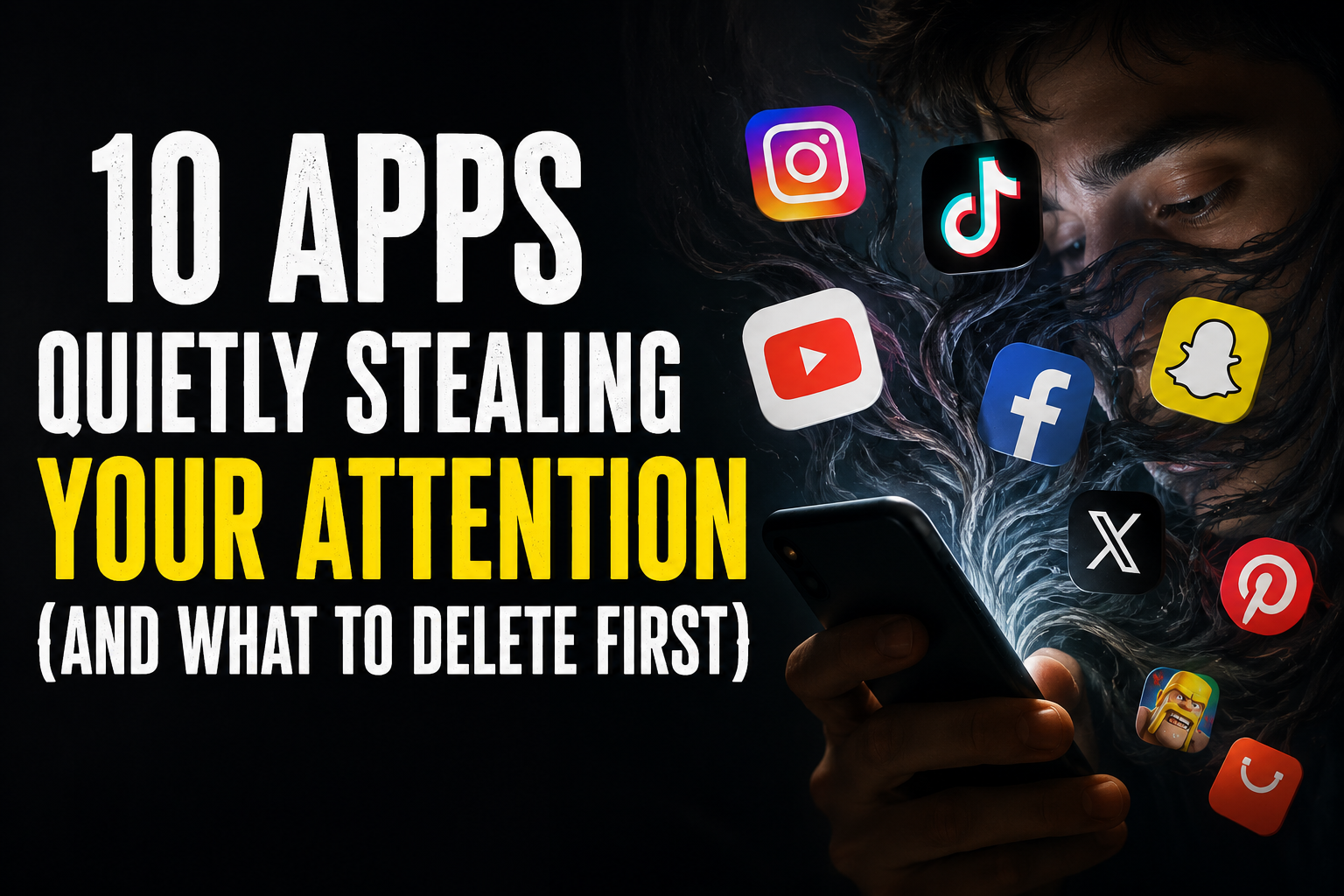
Phones may be handy but are sometimes the loudest room in your life. Even if you just meant to use an app for a minute, many keep you checking, touching, scrolling, and returning. Not all issues are evident. These applications may seem harmless at first. They appear enjoyable, useful, sociable, or productive. They may steal your peaceful times, disturb your attention, and make routine chores take longer over time. You do not need to remove all apps and give up technology. The objective is simpler. You must identify apps that demand more than they deliver. Learn, work, communicate, or relax using certain applications. Others usually trap you in loops. This post will look at 10 applications silently stealing your attention and what to eliminate first for a calmer, cleaner phone.
Social Media Apps That Take Five Minutes to One Hour
Since social media apps never seem finished, they typically take your attention first. After reading one article, replying to one message, or watching one video, you’re still there. These applications are about unending feeds, suggested posts, likes, comments, and notifications. New content displays with each screen refresh. Even if the material is useless, that slight surprise keeps your brain engaged. It’s toughest because social media feels essential. You may use it to connect with friends, follow news, support a business, or learn new things. If the app makes you fatigued, distracted, or upset, it may be taking too much. The program you launch without thinking is recommended to be removed first. Remove it from your home screen and utilize it just in a browser if uninstalling is difficult.
Short Video Apps That Make You Scroll Without Thinking
Some of the best phone attention traps are short video apps. They provide quick amusement in little parts, making children feel safe. Since each video is only a few seconds, your brain continues thinking, “Just one more.” Unfortunately, the next video starts before you can pick. This eliminates the natural break to resume your day. These applications subtly teach you to anticipate instant benefits. Reading, studying, cleaning, and working might get monotonous after a time. Not all short videos are horrible. Videos may be entertaining, helpful, or innovative. Endless flow is the issue. The first short video app to remove may be one you use when you’re bored, upset, or weary. Removing it reduces phone noise rapidly.
Mobile Games that Reward Repeat Visits
Mobile games might be enjoyable, but many are designed to keep you coming back. Daily incentives, limited-time events, streaks, upgrades, levels, and reminders are common. The game starts with a break. Later, it requests attention at particular times of the day. You may feel like you’re missing out if you don’t collect awards, complete activities, or check events. This is how a game becomes a habit rather than a choice. Some games are soothing and moderately fun. Some hurry, push, or hook you. A game that makes you check your phone throughout meals, sleep, or work may not be right for you. The game that controls you with incentives should be deleted first. A good game should be enjoyable, not tedious.
Shopping Apps That Create Fake Urgency
Shopping apps might help you find what you need, but they can also make you feel like every sale is important. Flash deals, countdown timers, app-only discounts, and “limited stock” messaging might make you surf more. You may launch the app to check a price but browse things you never require. The applications are brilliant at turning curiosity into habit. They retain your viewing history, give reminders, and repeat related stuff. This might make your phone feel like a constant store. If you use a shopping app often, don’t uninstall it. However, an app that helps you browse while bored may be worth deleting. Keep just the shopping applications you use purposefully and eliminate the rest that entice.
News Apps that Make Everything Urgent
News applications may keep you informed but stress your phone. Even for unimportant news, several news applications send notifications throughout the day. The words in headlines frequently make you want to tap immediately. After opening one narrative, you may open another until your mind is exhausted. Staying informed is nice, but being interrupted all day is not. A news app that makes you nervous or distracted may be silently grabbing your attention. A reputable website or newsletter lets you check the news at a specified time. Best to delete first is the news app with the most dramatic notifications. Choosing when to read news is calmer than letting notifications select.
Messaging Apps With Too Many Group Chats
Messaging applications link us to family, friends, students, teams, and workgroups. But they may also be a major distraction. Problems seldom involve one solitary chat. Group conversations, forwarded messages, responses, updates, and continuous pings. Some group conversations are useful, while others make noise all day. You may open a message to verify something crucial but be lured into a long, unimportant thread. Unlike other notifications, texts seem personal and are harder to ignore. You may appear disrespectful if you react slowly. Instead of removing your main messaging program, leave old groups, mute busy chats, and disable previews. If you have many messaging apps, eliminate the least valuable. Avoid giving every group your whole focus.
Email Apps for Pocket Work
You may use email applications, but they can also make your phone feel like a 24/7 workplace. Many individuals check email habitually, even when not urgent. This might distract you during family time, rest, meals, or peaceful periods. Sometimes email seems productive even when you’re only checking your inbox. Each communication requires thought, decision, reply, deletion, or saving. Small mental loads can accumulate during the day. Having a business email app on your phone makes relaxing tougher. Remove unnecessary email apps and retain one clear option. First uninstall the app linked to a seldom used account on your phone. Planned email checks are preferable to carrying every inbox.
Apps that Turn Rest into Endless Watching
Entertainment and streaming applications might help you relax, but they can also make relaxation less pleasant. Autoplay, suggestions, viewing history, and “continue watching” keep you in the app. Open it for one episode, trailer, or clip, then stay longer since something else starts immediately. This can discreetly interrupt sleep, hobbies, reading, or conversation. Not all entertainment is bad. Everyone needs breaks. The problem is when the software continues choosing for you. When rest becomes automatic browsing or viewing, you may feel exhausted. The entertainment app you access without knowing what to view is preferable to remove first. Keep one core app and eliminate the others. Fewer selections often calm and focus free time.
Food Delivery Apps that Make Boredom Seem Like Browsing
Food delivery apps are useful when you need a meal, but they may become a habit when you’re bored, weary, or avoiding work. These applications provide colorful food photographs, specials, ratings, delivery times, and ideas. Even when not hungry, opening the app and exploring might be easy. As you peruse, ordering gets more appealing. Judging eating choices is not the point. It involves observing how an app may convert a routine moment into an unexpected decision. If you use a meal delivery service regularly, consider whether it helps or distracts you during weak periods. The first app to uninstall is generally the unnecessary one. Keep the website option to order when required but eliminate the simple habit from your home screen.
Productivity Apps That Overwork
Some attention-grabbing apps aren’t entertaining. Some appear accountable. Planning, notes, projects, calendars, and routines can all be improved using productivity tools. Too many productivity applications might distract differently. You may spend more time planning than living. You may switch applications, change templates, track little behaviors, or repeatedly tweak settings. This may be beneficial but is also procrastination. The right productivity software should simplify your day. If it keeps you behind, confused, or busy, it may not assist. Start by deleting the app you constantly set up but seldom use. Five tools are unnecessary for life management. One notes app, calendar, and basic task system are enough for most individuals.
Apps for Editing Photos to Post Perfectly
If you like improving photos, photo editing applications may be fun and useful. They can also discreetly grab your attention by making you think every photo must be flawless before sharing. Filters, skin smoothing, background tools, templates, and adjustment sliders may make a basic shot take some time to edit. Sometimes it’s fun. Sometimes it exerts pressure. Comparing your photos to polished internet posts may make you feel bad about your everyday situations. A memory editing program that makes you spend more time repairing than enjoying it may be worth deleting. The program that makes commonplace photographs bother you should be deleted first. Remove the app that encourages overediting and keep the one that lets you make minor changes. To be memorable, your life need not be faultless.
Dating or Social Discovery Apps that Keep you Checking
Dating and social discovery apps may be attention cycles but can help people meet. Many applications keep users checking with swiping, matches, likes, messages, and profile views. Even when not seeking a chat, you may check the app for updates. Every minor alert might feel personal, which can be emotionally draining. You may gauge your mood via matches, answers, or silence. That gives an app a lot of power. Be honest about how these applications make you feel after using them. Are you hopeful and focused or exhausted and distracted? The program you use most but like least should be deleted first. Your phone shouldn’t feel like a slot machine while meeting people. Space, patience, and attention are needed for healthy relationships.
What to Delete First if Your Phone is Loud
Do not fix everything in one day if your phone is noisy. Start with the app that takes your attention most and returns the least. That will be a brief video app, social media app, or daily-reward game for many. Some like shopping, news, or group chatting. Personal conduct is the best indicator. Open which app without thinking? Which app erases time? Which app makes you feel worse? Note how your mind feels after deleting that one for a few days. Your dominion won’t last forever. You are seeing whether your day calms down without it. Notifications, logging out, and app removal from the home screen are other options. Avoid hating technology. Instead of defining your life, your phone should serve it.
Build a Cleaner Phone Without Feeling Limited
Cleaning your phone doesn’t have to be boring. You should find it easier to use. Keep life-supporting applications and remove noise-making ones. Phones should help you call, discover locations, take photographs, study, organize your day, and take healthy pauses. It shouldn’t distract you continually. Simple home screens may change things. Keep just purpose-used programs. Fold distracting apps, disable non-essential notifications, and create little regions where your phone is not the main focus. You may also schedule entertainment, messages, and news instead of checking all day. This provides you more control without complicating life. frequently grab your attention helps you concentrate better, feel calmer, and have moreentration, tranquility, and time for what matters.

Sunita Voss wanders through software like a city flâneur—observing, testing, occasionally getting lost, always finding shortcuts. She writes about digital minimalism, hidden web tools, and tech hacks with the patience of someone who enjoys the journey and the urgency of someone who values her time. No gurus. No gatekeeping. Just discovered paths.