
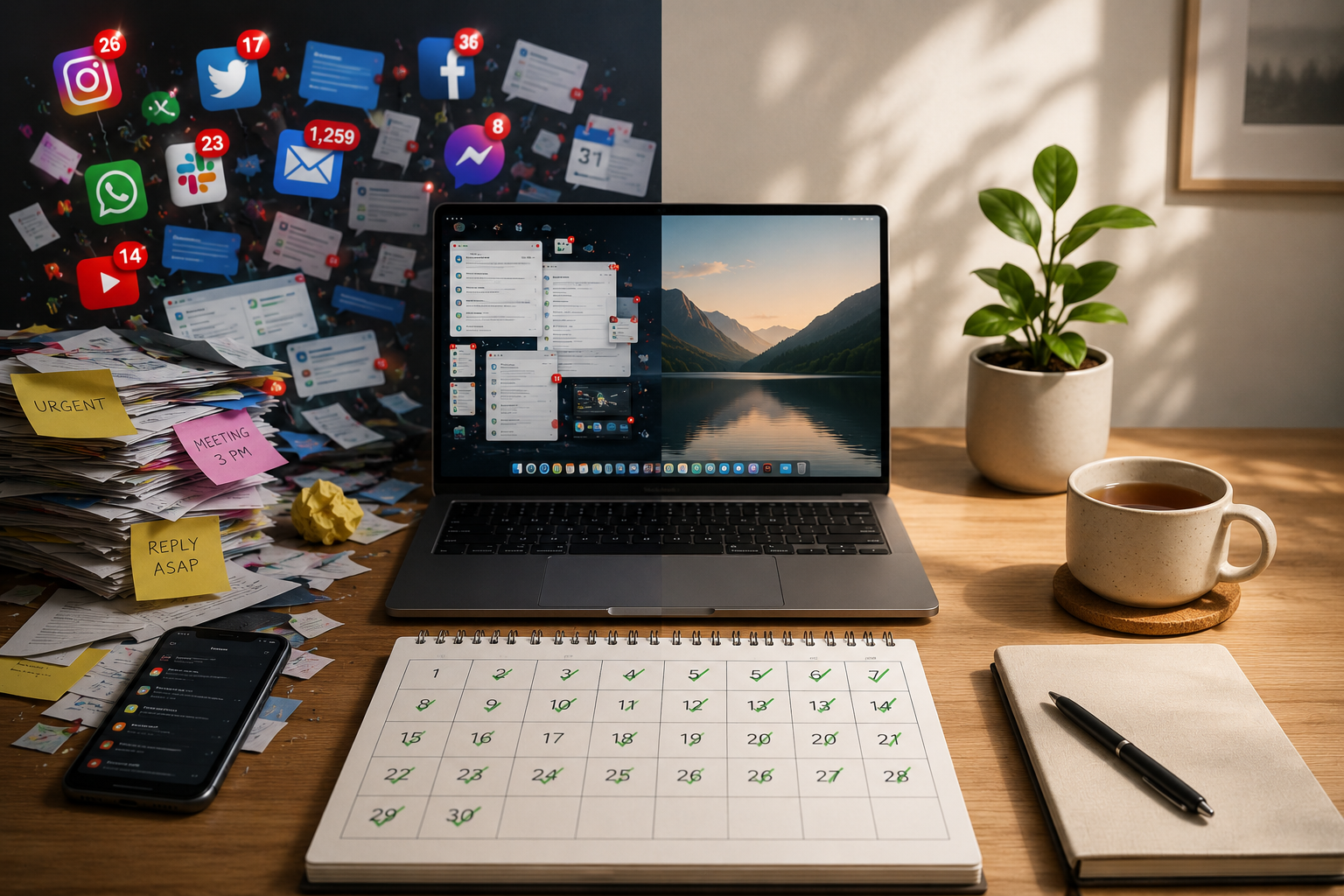
In today’s increasingly interconnected society, people spend countless hours daily on electronic devices. Smartphones wake us up in the morning, emails chase us all day long, and social media often fills the gaps in our quiet moments. Technology has simplified life in many ways, but it has also produced a new kind of ‘clutter’: digital clutter.
Many people feel overwhelmed; frequent reminders, endless scrolling, overflowing inboxes, and the need to be constantly online leave them breathless. The result is often poor concentration, reduced efficiency, and the feeling that technology controls life rather than serving it.
Digital minimalism can address these issues. Digital minimalism does not mean you have to swear off technology, but rather using it wisely and eliminating the digital noise that has no value for your life. Well-designed digital minimalism challenges can help you develop better habits, improve your focus, and regain control of your time. The good news is you don’t have to delete all apps or be completely cut off from the internet. A simple 30-day digital minimalism challenge can help you develop lasting habits without making life difficult. The key is finding a practical approach.
Understanding What Digital Minimalism Really Means
When people hear the term ‘digital minimalism,’ many think of throwing away their phones or disconnecting from the internet. But in reality, digital simplification is much easier to implement.
At its core, digital minimalism revolves around identifying the digital tools that truly add value to your life and removing all other clutter and distractions. It is not about reducing usage for the sake of reducing, but about using technology more consciously.
Many people spend hours every week on apps, websites, and notifications that offer little to no value; the concept of digital simplification helps you ask this question: are they useful or harmful? Once you scrutinize your digital habits in this way, it becomes easier to identify areas for improvement.
Why So Many People Feel Digitally Overwhelmed
Digital overload is one of the most common problems in modern life. Every day, emails, text messages, social media updates, news feeds, advertisements, and all kinds of other forms of digital information flood consumers. Each interruption seems insignificant in itself, but they pile up into a constant battle for attention. Even if you do nothing, prolonged interruptions can leave you mentally exhausted.
Many people unlock their phones dozens of times a day, for no apparent reason. It might start with a glance, but soon escalates to twenty minutes of scrolling. These seemingly insignificant distractions accumulate quickly. Digital overload usually does not stem from a single big problem, but from hundreds of small distractions that compete for your attention throughout the day.
Awareness at the Start of the Challenge
Awareness is the first step in any effective attempt at digital minimalism. Before you change anything, you must understand your current behavior. The amount of time people spend on their smartphones is incredible. By looking at screen time data, you can quickly see how many hours people spend daily on social media apps, entertainment apps, and other digital activities.
Do not judge yourself for the first few days, but instead pay attention to your habits. Notice what prompts you to look at your phone, what prompts you to check notifications, and how often you switch between online content. Awareness is the first step to real change. You cannot change behavior if you are not aware of it.
Reduce Unnecessary Notifications
One of the most successful adjustments in the 30-day challenge was reducing unnecessary notifications. Many apps on the market are designed to grab your attention. Every notification forces you to stop what you are doing and open the app. Some notifications are important, but many are pointless.
By turning off unnecessary notifications, you can quickly reduce the number of reminders you receive daily. This small change can make your digital environment more organized, allowing you to focus more efficiently on what really matters. Most people notice that after turning off most notifications, they no longer miss important information. People no longer react passively to notifications but start choosing for themselves when to use their electronic devices.
Organize Your Digital Space
Just as a messy home can be stressful, so can a messy digital space. A phone full of apps you rarely use, thousands of outdated photos, a disorganized home screen, and so on, can be a source of annoyance. A messy workspace, a jumble of files, and an overflowing inbox can also be unpleasant.
Take a few minutes each day of the challenge to clean up your digital space. Delete apps you no longer use. Delete duplicate files. Organize important files. Choose not to receive unsolicited notifications. Emails. They may seem insignificant, but they can provide a real sense of order and control. A tidy digital space often leads to clearer thinking.
Replace Aimless Browsing with Meaningful Activities
One of the biggest obstacles people have to overcome is aimless browsing. Entertainment and social media apps are designed to keep users occupied for as long as possible. This leads many people to spend much more time browsing than intended.
The solution is not simply to give up these hobbies. Instead of replacing them with other things, replace them with more valuable activities. During this challenge, use the time you would otherwise spend browsing to read books, learn new skills, enjoy hobbies, go out, or connect with family and friends. The key is not to deny yourself pleasure, but to be more mindful of how you use your time.
Schedule Time Without Electronic Devices in Your Daily Life
The most effective way to practice digital minimalism is by making room for real-life interactions. A good way to do this is by scheduling specific moments of the day without electronic devices. These moments help you focus on the here and now, rather than letting the digital and real worlds distract you.
Many people avoid using electronic devices while eating, talking, during morning activities, or before going to sleep. These small boundaries help reduce our dependence on electronic devices and encourage us to be more mindful of our daily lives. Over time, these moments without electronic devices often become the finest moments of the day.
Learn to Master Technology, Instead of Being Controlled by it
One of the core goals of the Digital Minimalism Challenge is to make the switch from passive to conscious use of technology. Many people open apps unconsciously when they are bored, anxious, or distracted. This behavior often develops unconsciously.
Digital Minimalism encourages you to pause before picking up your device and reflect on what prompts you to do so. Are you trying to do something, or are you simply repeating a habit? This small reflection can completely change your relationship with technology. Technology becomes a tool, not a default behavior; it begins to help you achieve your goals instead of distracting you.
Build Sustainable Habits in 30 Days
Most digital detox strategies fail because they are based on unsustainable, rigid restrictions. The secret to the success of the Digital Minimalism Challenge lies in gradual progress, not in striving for perfection. The philosophy is to develop habits that you can maintain even after 30 days. Small, regular adjustments are often more effective than drastic changes that last only a few days. By focusing on moderate changes, you can build a practical and sustainable system. This does not mean making short-term sacrifices, but rather creating a healthy digital lifestyle.
Understanding what Really Matters
The most rewarding aspect of this challenge is that it helps you discover digital hobbies that truly add value to your life. Moderate screen time is not necessarily bad. Many digital tools can help you learn, work, communicate, create, and grow. The key is to distinguish which tasks are truly valuable and which are simply a waste of time.
Over time, many people become more critical in choosing their focus. They start setting priorities and reducing activities that do not contribute to their goals or sense of fulfillment. This shift often leads to greater happiness and a stronger sense of control.
Challenge Can Help You Stay Focused
Most people start this challenge hoping to spend less time behind their screens, but discover other benefits along the way. With fewer distractions and digital clutter, focus improves naturally. Things that previously seemed difficult become easier because attention is no longer constantly diverted.
Users spend less time switching between apps, checking reminders, and responding to unnecessary distractions, and productivity typically increases. This is not just about getting more work done, but about doing necessary work with a clear mind and less stress.
The Lasting Value of Digital Minimalism
The true value of digital minimalism does not become apparent in the first 30 days. Once people form better habits, they often experience significant improvements in focus, organization, and time management. They are no longer addicted to technology but make more conscious decisions in their daily lives.
Digital minimalism also encourages people to handle information more rationally. People become more aware of what they read, watch, and interact with, rather than blindly absorbing it. Often, these benefits remain noticeable in the long term, even after the challenge has ended.
Conclusion
The 30-day digital minimalism challenge is not about completely swearing off technology. The key is building a healthier, more conscious relationship with the internet. By reducing distractions, clearing out digital clutter, minimizing unnecessary notifications, and paying more attention to your online behavior, you can regain control over your focus and time.
The best digital minimalism challenges are the least restrictive and the challenges you can actually stick with. Small, cumulative changes often yield enormous benefits. If your digital life is overwhelming, this challenge offers a practical way to think more clearly, concentrate better, and lead a more balanced life. The less digital noise you allow into your life, the more space you make for what truly matters. You might notice this after just 30 days.
FAQs
1. What is digital minimalism?
Digital minimalism is a lifestyle that advocates for the conscious use of technology. The goal is to eliminate unproductive distractions and digital clutter and keep only the truly useful digital tools.
2. How much screen time am I allowed per day during the challenge?
There is no fixed amount. The goal is to make you use technology more consciously and reduce pointless screen time, rather than focusing on specific usage durations.
3. I find it difficult to stick to this. What should I do?
Start small, focus on progress, not perfection. Setting realistic goals helps you stick with it.
4. What is the biggest benefit of the Digital Minimalism Challenge?
“For many, the biggest benefit is regaining control over their attention.” By reducing distractions and using technology more responsibly, it becomes easier to focus on important activities and goals.

Sunita Voss wanders through software like a city flâneur—observing, testing, occasionally getting lost, always finding shortcuts. She writes about digital minimalism, hidden web tools, and tech hacks with the patience of someone who enjoys the journey and the urgency of someone who values her time. No gurus. No gatekeeping. Just discovered paths.