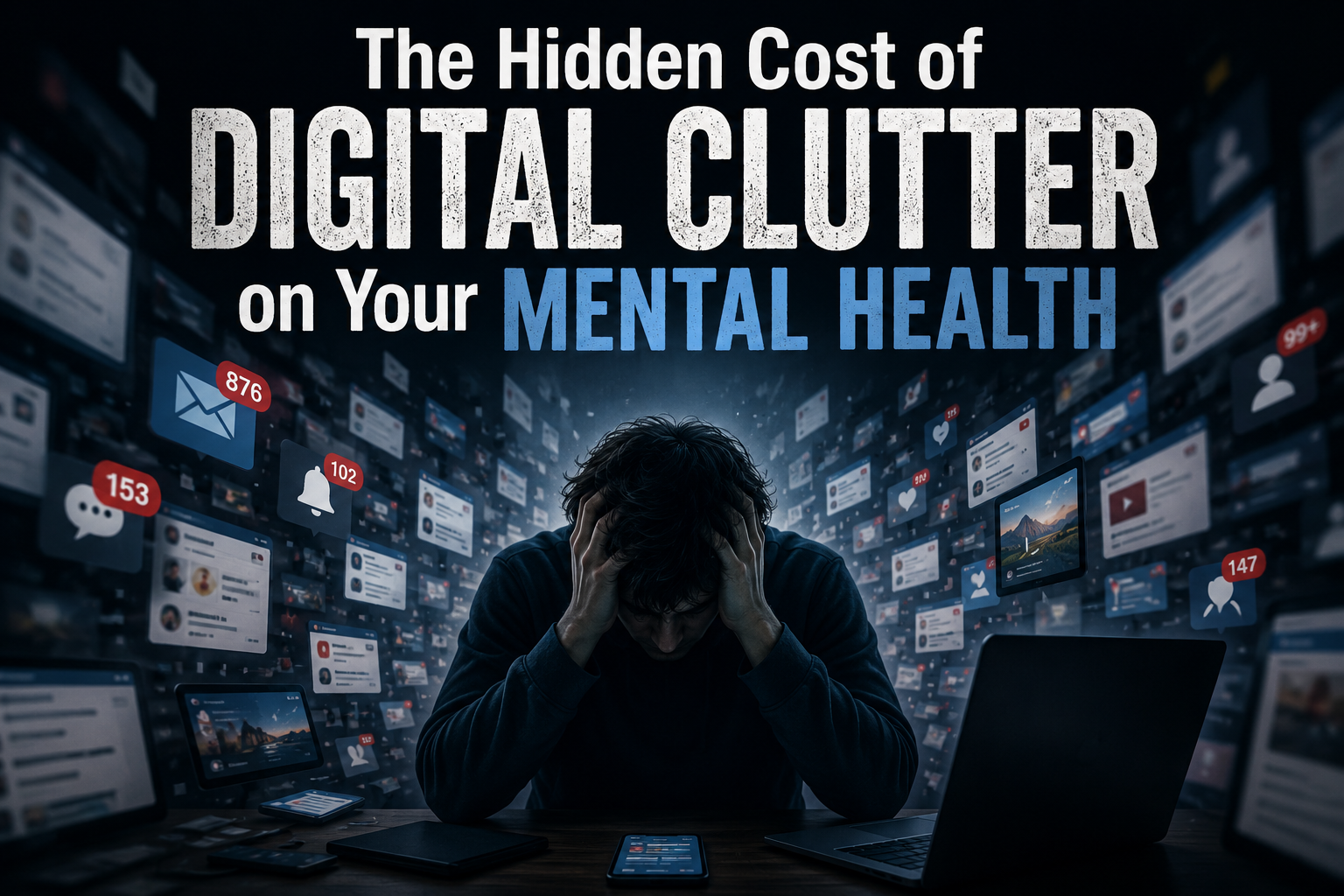
Digital clutter is difficult to spot because it isn’t scattered everywhere or hidden away in a cupboard. It resides in your phone, laptop, inbox, photo library, download folder, and cloud storage. It might seem insignificant. Unread emails, screenshots, saved blogs, unused apps, and a few scattered files seem trivial. However, this hidden clutter can gradually disrupt your daily life. Every time you turn on your device, you see too many options, notifications, and unfinished tasks. This can distract you, exhaust you, or cause you immense stress even before you start working. Digital clutter can have subtle effects on your mental health. It often manifests as feelings of anxiety when checking emails, a lack of focus on everyday tasks, or frustration when you cannot find important files. A tidy digital environment can help you relax, simplify your life, and increase your productivity.
Why Digital Clutter Feels So Overwhelming
Your brain still views digital clutter as information requiring your attention, causing you to feel overwhelmed. Even if you don’t open every file or piece of information, you notice the number of unread emails, app icons, open tabs, and saved files. This provides you a sense of incompleteness. Clutter in real life might stay in drawers, but digital clutter is everywhere. Breakfast, work, travel, and going to bed—your phone becomes an integral part of your life. Chaos is therefore a constant companion. A cluttered home screen, desktop, or notification list can easily distract you. Numerous distractions hinder your concentration on a single task. This makes digital clutter more tiring than you might realize. It is not just about storage space; it is also about mental space. When your digital life is chaotic, your thoughts become disorganized as well.
Digital Clutter and Stress
Digital clutter causes daily stress, a serious risk to your mental health. This stress may not stem from a single problem, but rather from the accumulation of many small digital issues. You might open your email and find hundreds of unread messages. You might discover dozens of files with the same name for the same document. You try to rest, but you keep getting notifications from inactive apps. These brief interruptions can make you feel physically and mentally exhausted. Even when everything is running smoothly, digital clutter can make you feel like you are falling behind. It constantly reminds you about unanswered messages, to-do lists, images, and files that you still need to process. This can turn your electronic devices from tools into a burden. A tidy digital environment helps reduce daily mental distractions, but it does not eliminate all stress.
How Digital Clutter Affects Focus and Productivity
Digital distractions make it difficult to concentrate. Imagine you want to write, study, or work, and you open your laptop, and your desktop is full of files. Multiple tabs are open in your browser. Your phone is constantly vibrating with notifications. Before you even start, your attention is already wandering. Digital clutter makes it easier to start a task than to switch to something else, examine other things, and eventually forget about it. This slows down even simple tasks. You can also feel exhausted without having accomplished anything. Many people blame themselves for their lethargy or lack of concentration, but the environment can also play a role. A cluttered digital environment forces you to make many simple decisions. Should I close this tab? Should I respond now? Should I delete this file? These seemingly trivial decisions require thinking. Simple, structured digital tools can reduce mental distractions and make work easier.
Digital Clutter Can Affect the Effectiveness of Rest
Rest does not necessarily mean stopping work. Relaxing your mind is just as important. Digital clutter can disrupt rest because your phone or computer constantly gives notifications of unfinished thoughts. You lie down to rest, but old messages, app notifications, saved movies, errand reminders, and social media alerts keep flooding in. Instead of relaxing, your brain is busy organizing, responding, and thinking. Even doing nothing can make your free time feel overwhelming. Digital clutter can also affect your enjoyment. Opening a streaming app can give you more options than you are actually watching. Viewing saved messages can make you want to read them all. Photos can be frustrating because they are not organized. A cluttered digital work environment can even distract your thoughts.
The Emotional Burden of Unfinished Digital Tasks
Digital clutter often creates a significant emotional burden because many files, emails, and other projects are linked to plans. Unread messages can remind you of conversations you have put aside; saved articles can remind you of things you still need to study; a folder full of old photos can trigger memories you never organized; and a long to-do list app can remind you of unrealistic ambitions. As a result, digital clutter seems to affect you personally, rather than just as random information. It can become a series of silent self-promises. These items pile up and easily lead to feelings of guilt, falling behind, or mental exhaustion. But this scenario does not mean you have to delete everything or strive for perfection. In short, be kind to yourself and pay attention to what is taking up your emotional space. Some electronic devices are indeed useful, while others only cause stress. Getting rid of the unnecessary can bring you relief.
Why Notifications Create Mental Noise
The effects of digital clutter are most severe when notifications constantly distract you. A single notification might seem insignificant, but a flood of notifications can cause anxiety. Every sound, every vibration, or notification demands your attention, choice, and action. Even if you try to ignore them, they can still draw your attention. The constant stopping and starting again can make it harder to relax. Notifications can create a habit of checking your device, even when nothing important is happening. You might check just one message but spend ten minutes on other apps. You may feel like time is flying by. When you no longer fully focus on yourself, the potential damage of digital clutter to your mental health becomes clear. One of the simplest ways to reduce digital noise is to turn off notifications. You don’t have to be on standby 24/7 and constantly monitor every app.
Social Media Feeds and Comparison
The impact of the volume of social media posts on your emotions differs from person to person. It is not just about saving too many posts or videos. The emotional content you see daily is also important. Too many accounts can flood your feed with opinions, advertisements, trends, news, seemingly perfect lifestyles, and endless updates. This can overwhelm your thoughts and make your life seem smaller than it actually is. Taking a short break from social media can leave you feeling distracted, empty, or lonely. When saved posts become a jumble of things you will never use, they constitute clutter. The intention is not to avoid social media. Many people find it useful, fun, and social. To use social media more rationally, you can easily enjoy it without feeling overwhelmed if your feed is useful, calming, or meaningful. Just as a healthy diet makes you feel good, so does exercise.
The Impact of Digital Clutter on Decision Fatigue
When we are overwhelmed by choices, we experience decision fatigue. Digital clutter exacerbates this problem by triggering everyday, mundane decisions. Which email should I check first? Which file is the final version? Should I save this photo? Should I update this app? Should I answer now or later? These questions seem simple, but they pile up quickly. Even if you do nothing all day, your brain can become exhausted. This affects your work, eating habits, rest, and personal decision-making. Digital clutter can sometimes feel overwhelming and lead to procrastination. You might ignore your emails or download folders because you don’t know how to begin. A simple system can alleviate this stress. When the destination of files, programs, and communication is clear, your brain operates at a lower frequency. Fewer choices can actually bring peace.
Easily Clean up Your Electronic Devices
Cleaning up your electronic devices doesn’t have to take up an entire weekend. Start small and do it regularly for the best results. Begin with your phone’s home screen, your email, the downloads folder, or the tabs in your browser. The goal is not perfection, but a user-friendly digital environment. Delete unnecessary apps. Move important files to clean folders. Rename files so you can easily locate them later. Unsubscribe from emails you don’t use often. Close irrelevant tabs. Take clear, temporary screenshots. These simple steps can quickly streamline your smartphone. Developing small habits, such as cleaning up your downloads folder weekly or checking your notification settings monthly, can help. Digital clutter accumulates slowly, so handle it with care. You don’t need a perfect system, just one that simplifies your daily life.
Improve your Relationship With your Devices
For a healthy digital life, it is important not to reduce your technology usage. Technology should help you, not consume you. Your phone, laptop, and apps should enable you to work, study, socialize, relax, and create. An overcrowded digital environment can make you feel like you are tasked with your hands. To improve your experience with electronic devices, start by using them more mindfully. Determine which apps help you relax and which cause you stress. Choose user-friendly folders and avoid others. Observe when your device helps you and when it distracts you. Small adjustments can make a big difference. You can simplify your home screen, set quiet moments, delete useless apps, and create folders that are relevant to your daily life. An organized, functional, and calming digital environment can reduce the risks to your mental health caused by digital clutter. Electronic devices should improve your quality of life, not distract you.
Conclusion
Finally, because digital clutter can grow unnoticed, its impact on your mental health is difficult to detect. It can start with too many emails, a cluttered desktop, expired downloads, too many photos, or constant notifications. These seemingly simple things can gradually lead to stress, concentration problems, disruption of your relaxation, and an overload of thoughts. The excellent news is that digital clutter can be gradually reduced. You don’t have to build a strict system or completely delete all your online content. Simply remove the useless content and organize the useful content. A tidy digital environment can improve your day and mood. It can speed up searches, improve your concentration, and increase the enjoyment of using electronic devices. Modern life is full of technology, but it doesn’t have to be a burden. Cleaning up your digital clutter can give you focus, peace of mind, and tranquility in your daily life.
FAQs
1. What is digital clutter?
Unread emails, apps you rarely use, expired files, duplicate images, saved messages, messy folders, and excessive notifications are all examples of digital clutter. It becomes a problem when it confuses you, causes stress, or complicates your digital life.
2. Is digital clutter harmful to mental health?
Digital clutter can affect your peace of mind, concentration, and organizational skills throughout the day. It may not be a major source of stress, but it can make you feel overwhelmed and restless. A tidy digital environment can contribute to a calmer daily life.
3. Where do I start if I have too much digital clutter?
Start with frequently used small areas, such as your phone’s home screen, your email inbox, or your downloads folder. Quickly delete unnecessary items. It is easier to declutter in stages than to do everything at once.
4. How often should I clean up my digital space?
For many people, once a week is sufficient. Delete unnecessary downloads, screenshots, tabs, and emails. Regularly checking your apps and notifications can also help reduce digital clutter.
5. Do I have to delete everything to feel organized?
Not everything needs to be deleted. Keep what is useful and remove what causes stress or confusion. A good digital environment should meet your needs and simplify your life, not become a collection of rules.

Sunita Voss wanders through software like a city flâneur—observing, testing, occasionally getting lost, always finding shortcuts. She writes about digital minimalism, hidden web tools, and tech hacks with the patience of someone who enjoys the journey and the urgency of someone who values her time. No gurus. No gatekeeping. Just discovered paths.